Orientation Leader & Peer Health Educator2023 – 26Welcomed 640 new students in one season with a team cut from 18 to 7; ran wellness programming in the residence halls.
I've lived in Framingham my whole life, and I've worked for it from almost every side: at City Hall in the first class of the Mayor's Summer Internship Program, at Framingham State as student body president, and at the Christa McAuliffe Center, where I started as a Flight Director intern in the blue Challenger flight suit and now build the worlds visitors step into.
Knowing one community that well taught me what makes people show up: places, science and institutions that are easy to step into. That's the thread through the CAVE, SGA Sync and my research with high-schoolers, and it's what I want to keep building, for Framingham and for any community that needs it.
Toolkit: Unreal Engine 5 (Blueprints, UMG, nDisplay, Cesium) · JavaScript, WebGL, React + TypeScript · Firebase · Python, Java, C# · Arduino · applied AI (RAG with citations, prompt guardrails) and building with Claude Code · English and Spanish
Contact
Let's build something people can step into.
Graduating 2026 and open to immersive, civic-tech and creative-technologist roles in Boston or remote.
Walk-in VR worlds for a NASA-legacy science center
Role
Program Facilitator → CAVE developer
When
Oct 2025 – now
Team
Me, with Center director Irene Porro
Tools
Unreal Engine 5, nDisplay, Cesium, WebGL
ProblemThe Center had a three-wall VR CAVE but few scenes, and staff couldn't make new ones themselves.
What I didBuilt the scenes, then the toolkit and slideshow app that let staff build their own.
ResultA flyover premiered for state officials at Mass STEM Week, and a toolkit staff now use.
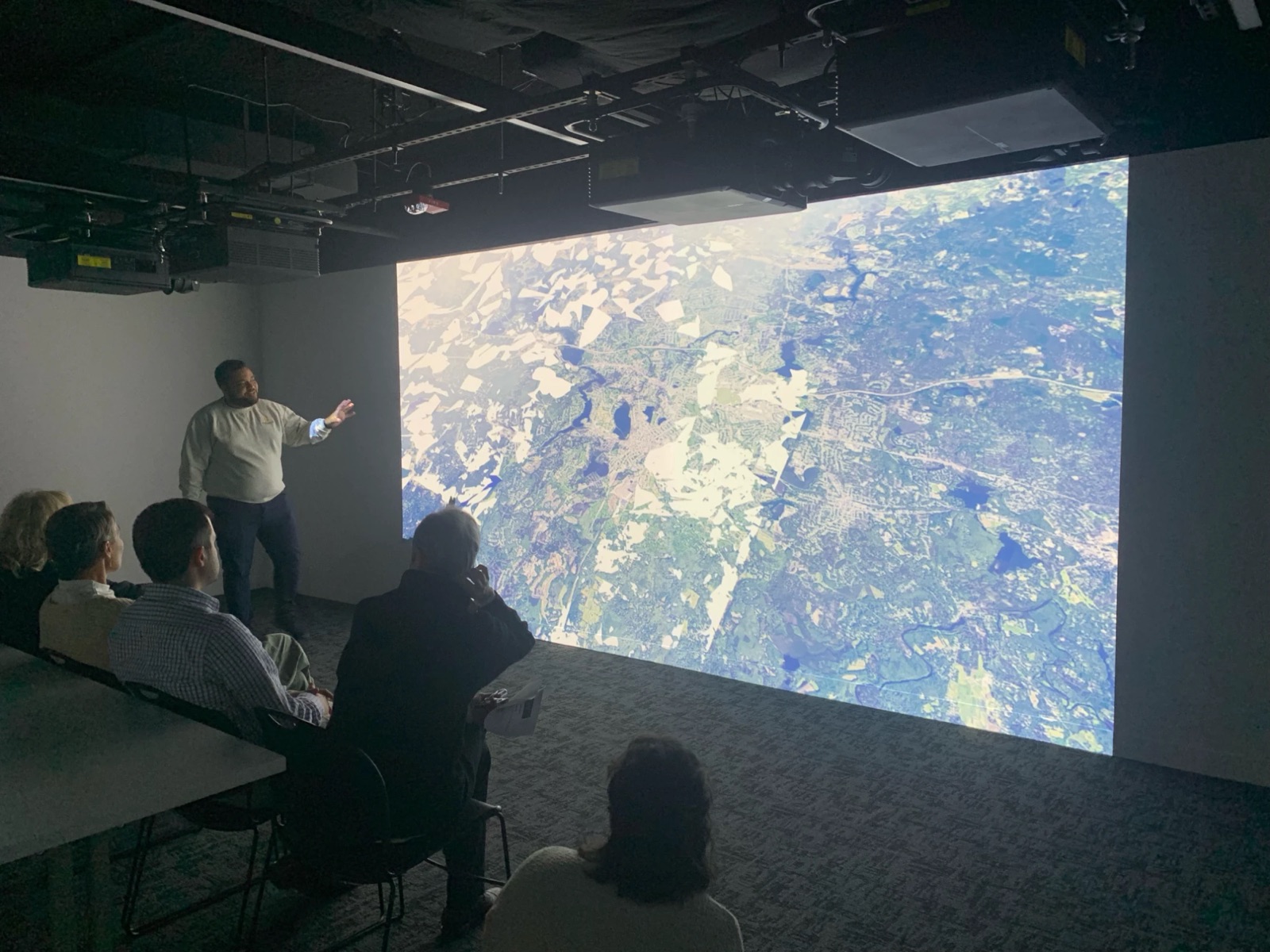
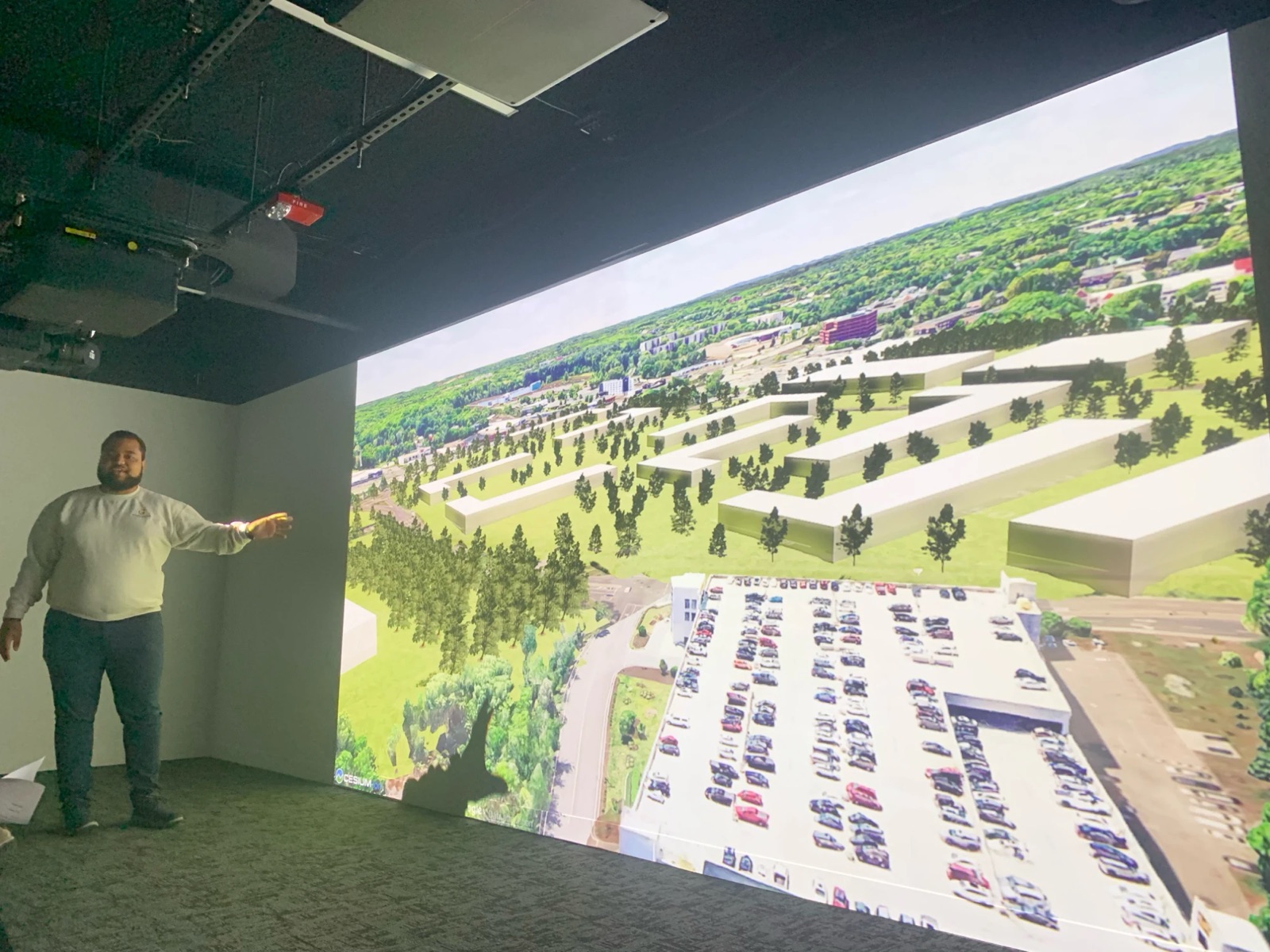
Presenting my students' Shoppers World redesign on the CAVE wall.
The problem
The Christa McAuliffe Center carries the legacy of the teacher chosen for the Challenger mission. Its CAVE is a room whose walls are projector screens, so a group can stand inside a 3D world together. It's a powerful way to show people a place before it exists, but every scene took specialist work, and there was no way for staff to build or present on their own.
What I built
Shoppers World, reimagined. A to-scale Unreal Engine 5 model of my PETM students' net-zero redesign of Framingham's biggest parking lot. Real terrain streams in through Cesium; nearly 9,000 buildings, trees and solar canopies are placed by hand.
A walkable navigation kit ("Jumper"). Visitors move node to node with W/A/S/D, driven by a data table so each scene defines its own paths. Pop-ups appear on a key press or when you walk into an area.
Starter projects for walking, flying and driving, plus 3D-scan, forest and Cesium worlds, all running across every projector wall through nDisplay.
Cave Slides (deck.petm.one): a browser slideshow studio where both CAVE PCs play in sync, a phone is the remote, and a slide can launch an Unreal scene onto the walls. The sky behind this page is its engine.
A MetroWest flyover on real map data. The scene descends into Shoppers World so the room can compare today's lots with the students' plan.
The result
~9,000hand-placed elements in the Shoppers World model
8 mo.of weekly builds, logged below
1portable toolkit with docs and tutorial videos for staff
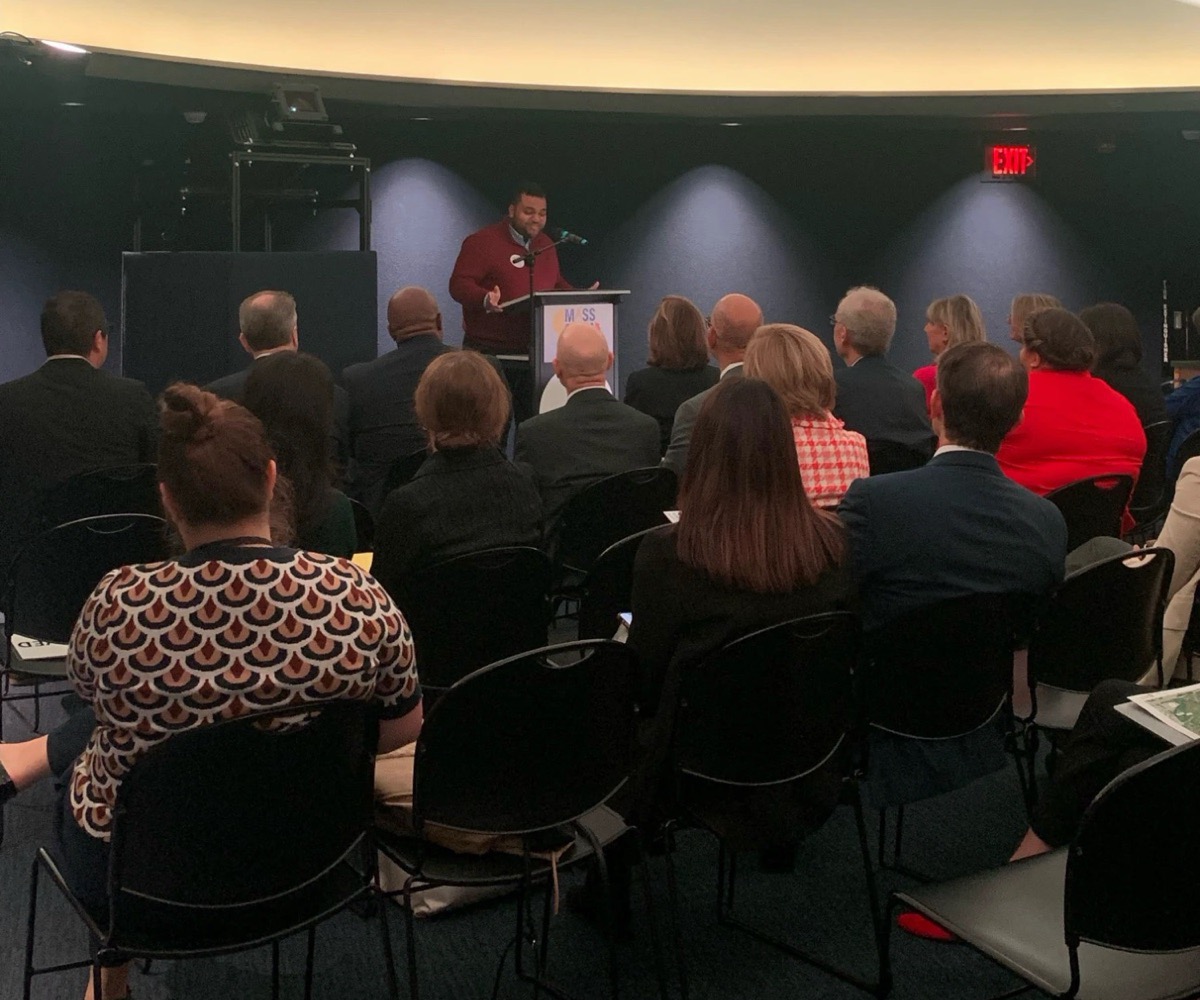
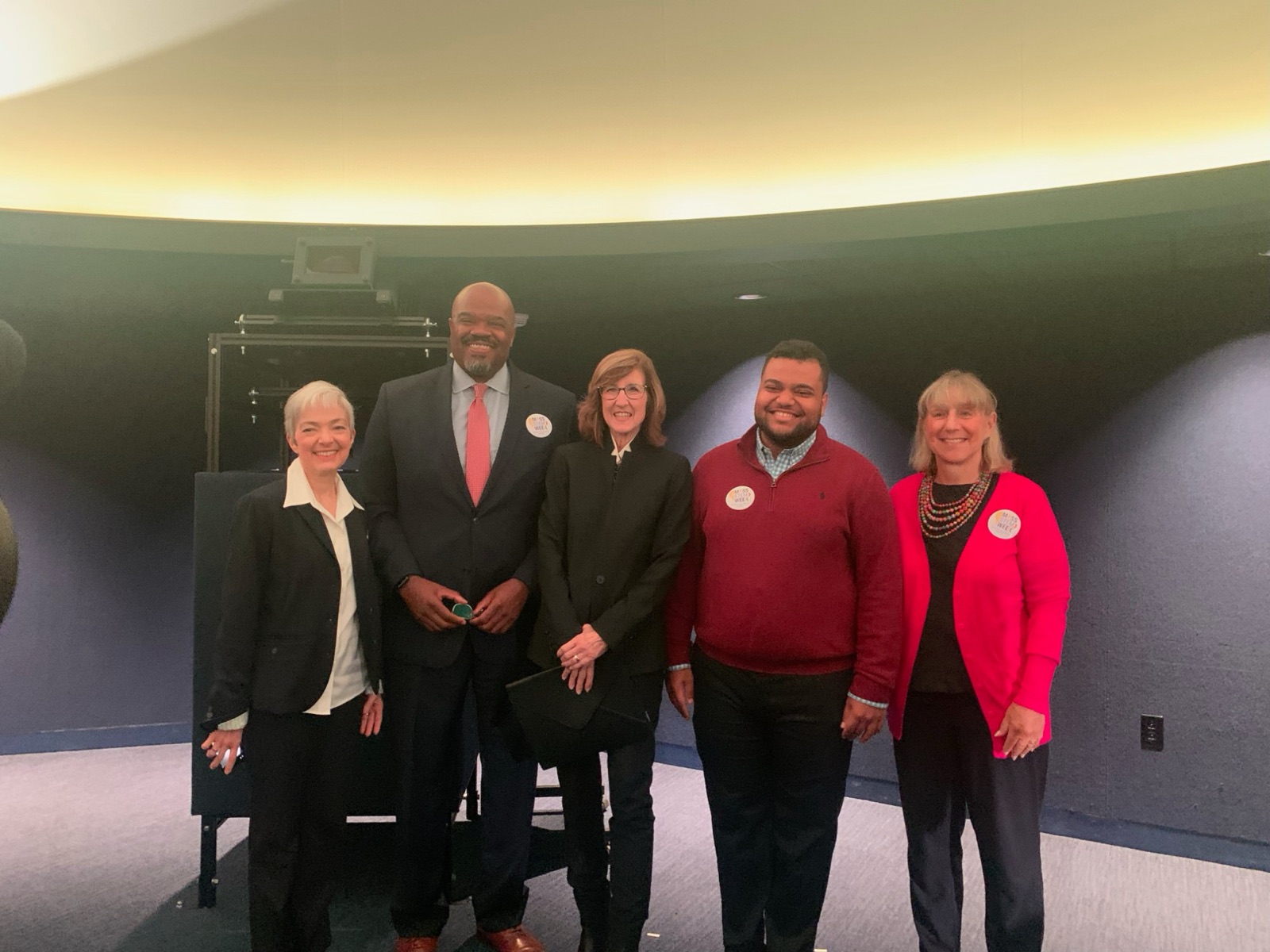
In October 2025 the Center was the first stop of Massachusetts STEM Week. I spoke to the Secretary of Education, the Senate President and FSU's president about my path from the Challenger Learning Center, then narrated the premiere of the flyover.
Speaking at the Mass STEM Week kickoff, Oct 2025.Left to right: Irene Porro, Secretary of Education Dr. Stephen Zrike Jr., FSU President Nancy Niemi, me, Senate President Karen Spilka.
Week by week
Open any week to see what I built and learned.
What's next: a geothermal drilling training simulator in the CAVE, so people can practice drilling procedures in an immersive environment before they're on a real rig. It builds directly on the geothermal research in my PETM case study.
Case study · Civic software
Replacing paper votes with a live governance app
Role
Sole designer and developer
When
Jul 2025 – now
Users
FSU Student Government Association
Stack
React 19, TypeScript, Firebase, Gemini
ProblemOur senate ran on paper, group chats and spreadsheets. Records got lost and votes were hard to verify.
What I didDesigned and built SGA Sync: live meetings, legislation history and AI search that cites the bylaws.
ResultFramingham State's student government runs its meetings on it.
Try it
This demo is built from SGA Sync's own components, with sample data. Click around.
fsu.sgasync.com
The problem
As president I was responsible for a $419K student activity budget and a senate that votes on it under Robert's Rules. Motions lived in notebooks, minutes in shared docs, and the history of a bill was whatever someone remembered. New senators couldn't find out how things worked, and nobody could quickly answer "what do our bylaws actually say?"
Key decisions
Built around how a meeting really runs. Quorum, a floor queue and roll-call votes happen live, and the minutes write themselves as you go.
Every bill keeps its story. Legislation carries its full journey from draft to committee to passed, so anyone can see how a decision was made.
AI that shows its work. Ask Sync, inside Universal Search, answers from the senate's own constitution, bylaws and minutes and quotes the exact clause (retrieval-augmented generation). I designed the loader, the cited sources and the "verify this" reminder so people trust it the right amount.
Privacy before launch. Reviewing Gemini's terms, I found free-tier data may be used to improve Google's products, so I held the privacy policy until that was settled and checked our wording against FERPA.
Trust built in. Role-based permissions, append-only audit logs, and a phone you can pair as a voting clicker.
The result
SGA Sync is live at sgasync.com and is how Framingham State's senate runs meetings, tracks legislation and keeps its record. It's multi-tenant, so another campus could use it too.
What I learned: civic tools live or die on trust. Showing sources, keeping an audit trail and being honest about what the AI can't do mattered more to adoption than any single feature.
Case study · Research mentorship
Three summers turning high-schoolers' questions into clean-energy plans
Role
Lead facilitator → internship manager
When
Summers 2024, 2025, 2026
Program
PETM, McAuliffe Center
Funding
NASA Mass. Space Grant (2024, 2025)
ProblemTeach high-schoolers real climate research, about places they actually live.
What I didDesigned the tools and the research arc, managed the interns, and co-wrote the final report.
ResultThree projects, each building on the last, from heat sensors to a net-zero library.
2024 · Measuring heat where people live
With seven high-schoolers and three other facilitators, I studied urban heat in MetroWest environmental-justice communities. I designed the Micro-Community Temperature Monitoring System (an Arduino with a waterproof sensor, real-time clock and SD logging) and the students built and programmed every unit. Our rooftop test showed what roof color does:
133.6°Fpeak surface temp, black roof
103.8°Fpeak surface temp, white roof
93.4°Findoor temp under a green roof (vs 99°F+ under black)
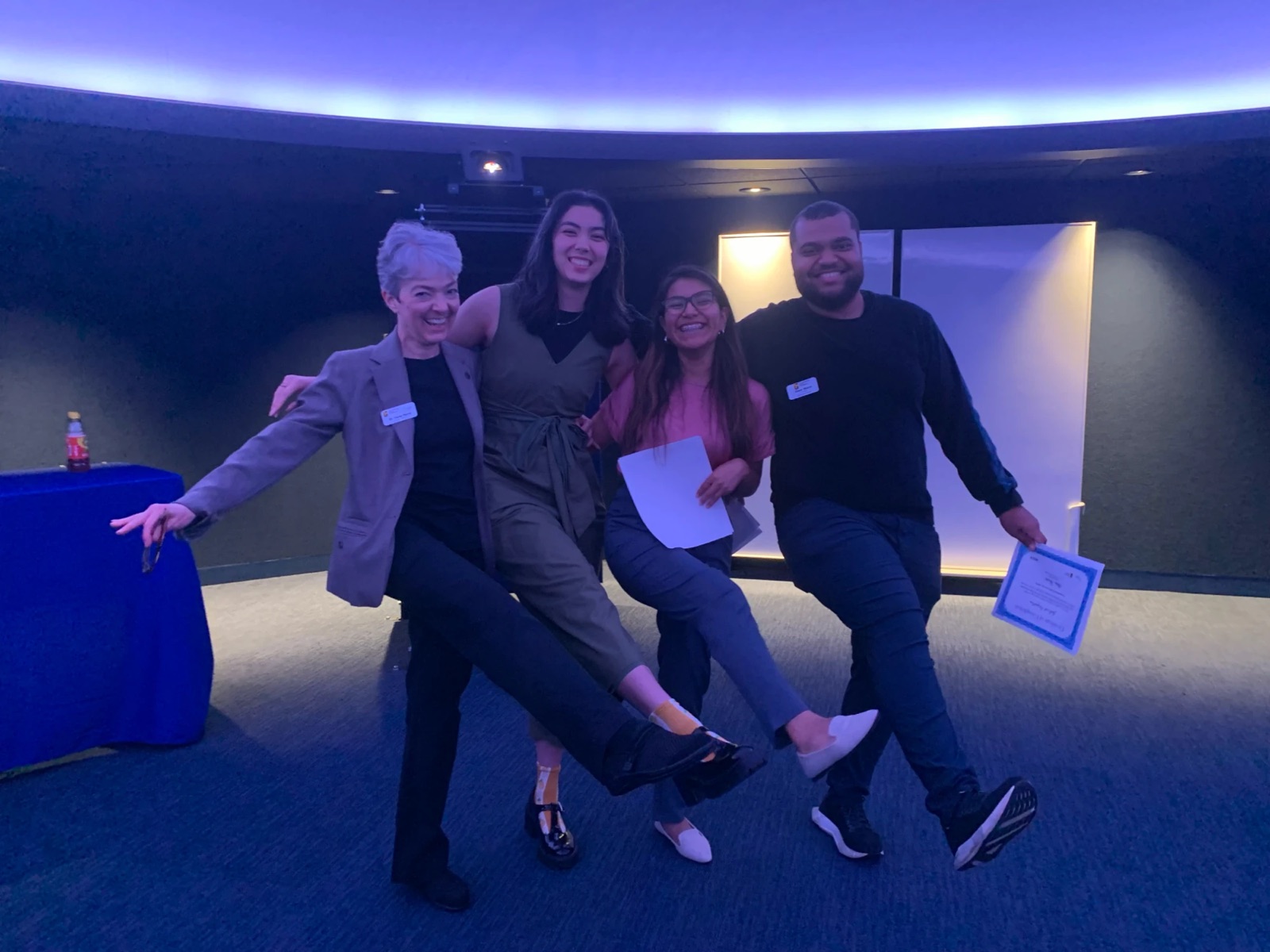
Presentation day 2024: the facilitator team, about to hand our interns their certificates.
2025 · Shoppers World, net-zero
We moved from measuring heat to designing solutions. The team redesigned Shoppers World as a walkable neighborhood heated and cooled by a networked geothermal field of about 792 boreholes, with a park on top. I then turned the plan into the Unreal Engine model for the CAVE (see the CAVE case study). 2025 final presentation ↗
2026 · A clean-energy Whittemore Library
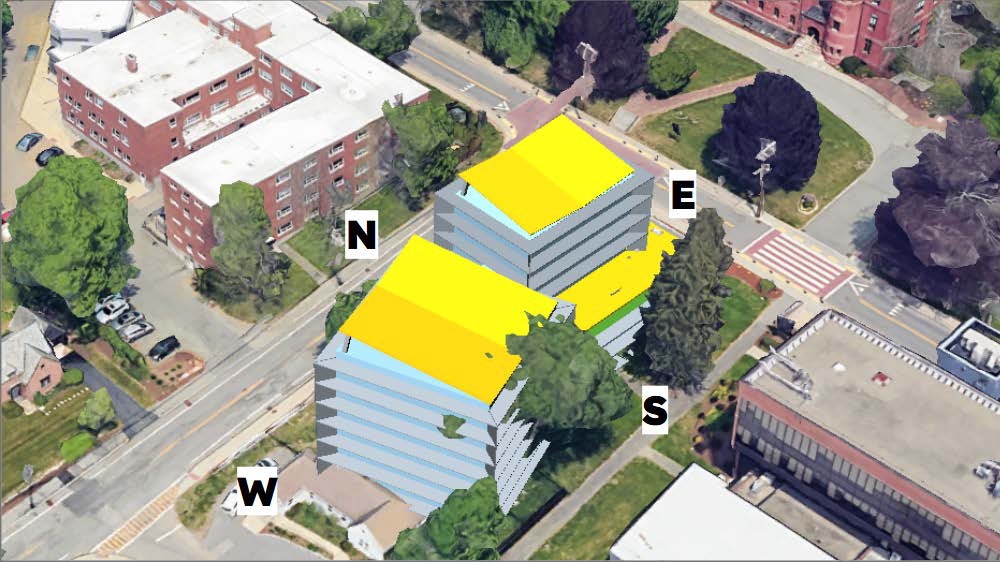
FSU's Campus Master Plan calls for rebuilding the Whittemore Library, one of its most energy-hungry buildings. Nine interns designed an all-electric replacement that combines passive design, geothermal and solar. I led the geothermal team, which sized the borefield, and co-wrote the final report with Tessa Bielak and Brigid Ohl.
The proposed library. Model by Tessa Bielak and Raphael Mastroianni.
20target energy use (kBTU/sq ft/yr) vs 44 for a code-built baseline
48geothermal boreholes vs 94: the field fits under the building
4.5MkWh/yr of solar potential across roof, terrace and nearby lots
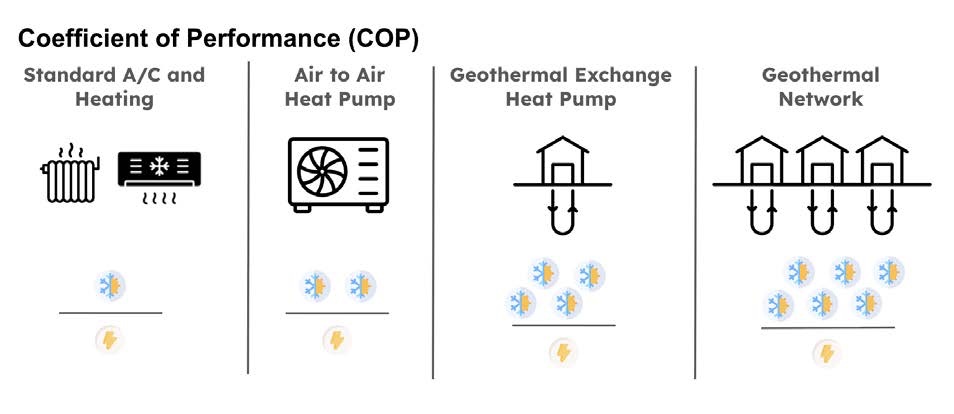
A figure I made for the report: each unit of electricity gives ~1× heat with standard systems, 2× with air-source heat pumps, 4× with geothermal, 6×+ with a shared geothermal network.
Where it leads: three summers of geothermal research are why I'm now building a geothermal drilling training simulator for the CAVE.
Case study · Leadership
Rebuilding a student senate from 6 members to 32
Role
Senator → VP → President
When
2023 – 2026
Budget
$419K student activity fund
Also
Orientation Leader, 3 years
ProblemA senate of six couldn't represent a campus, and few students voted.
What I didRecruited, created committees around what students raised, and gave the senate better tools.
Result32 senators, and spring voter turnout up from 36 to 276.
6 → 32senate members
36 → 276spring election voters
640new students welcomed at orientation, with a team cut from 18 to 7
How
Learned the money first. As treasurer pro tem and then vice president I learned the budget line by line, before running it as president.
Turned concerns into committees. When students raised safety issues at our fall retreat, I proposed and moved a campus-safety committee; we also approved a Diversity and Inclusion committee.
Made it easy to help. Built a donate-a-meal program with Sen. Jobe Murphy so students can give meal swipes to classmates.
Fixed the tools. Moved our records and votes into SGA Sync, software I wrote for the senate.
Left it better. My last act was an end-of-year commitment letter, passed 14–0, before swearing in the next president.
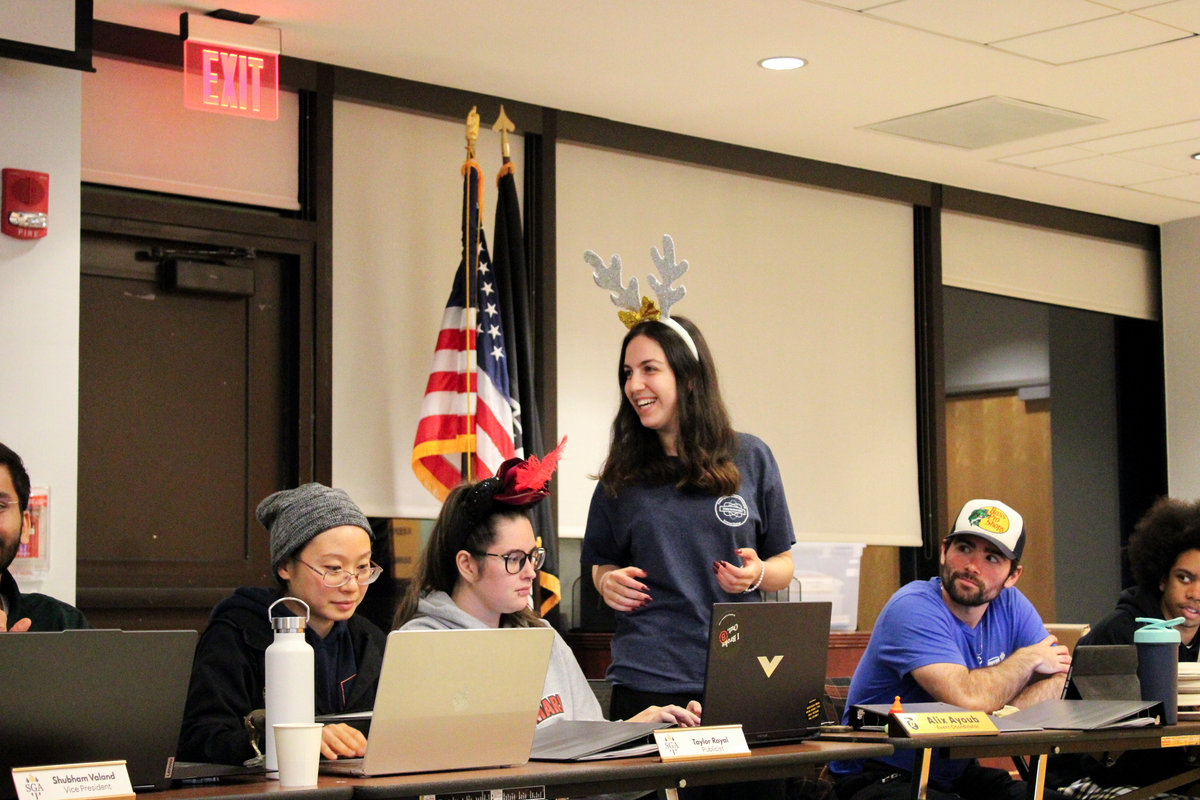
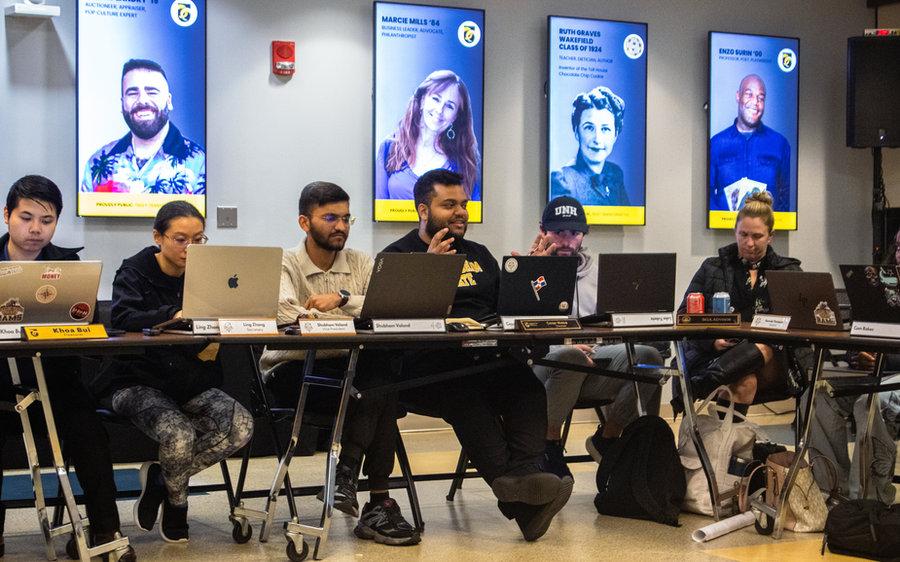
The senate meeting where the campus-safety committee was created, Oct 2025. Photo: The Gatepost.
Putting data behind the city's housing and parking decisions
Role
Planning intern, Planning & Economic Development
When
Jun 2023 – May 2024
Program
Mayor's Summer Internship Program, first cohort
Tools
U.S. Census data, Excel, presenting
ProblemThe city was revising its Housing Plan and planning a key project, and both decisions needed real numbers.
What I didAnalyzed U.S. Census data for the Housing Plan and led a parking study for consultants.
Result$120,000 in rental assistance funded, and 15% more parking for the project.
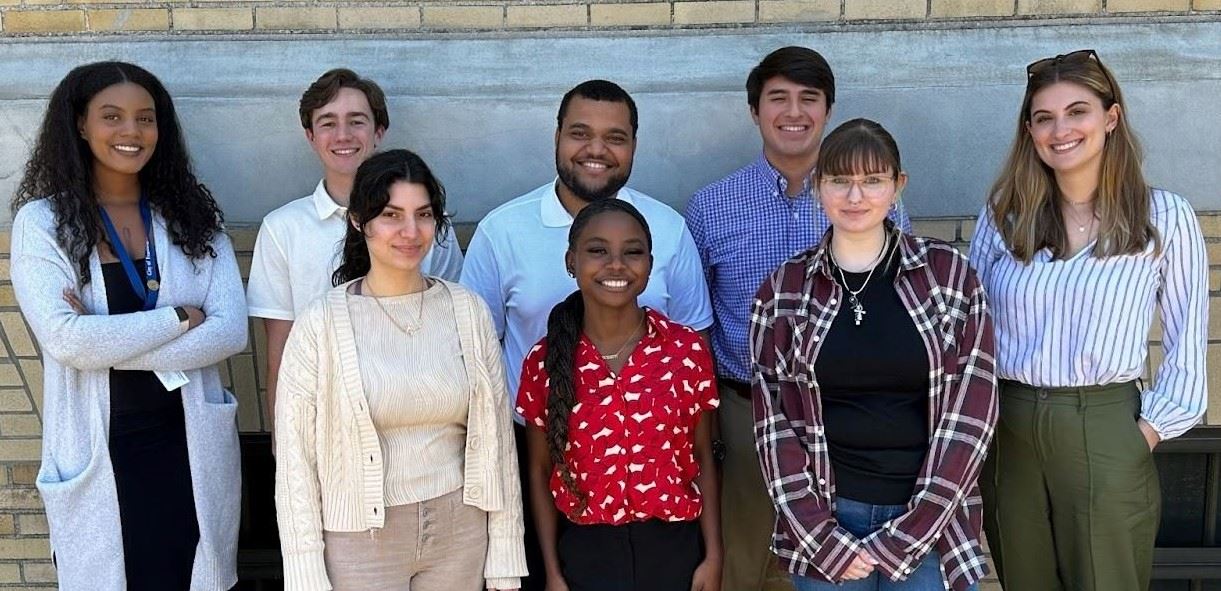
The first Mayor's Summer Internship Program cohort, 2023. I'm in the center of the back row. Photo: City of Framingham.
The program
In 2023 the City of Framingham launched the Mayor's Summer Internship Program, a paid cohort that places college students in city departments to work on real projects and learn how local government runs. I was part of that first class and was placed in the Planning & Economic Development Division, and I stayed on through May 2024.
What I did
Housing data. Analyzed U.S. Census data to support revisions to the Framingham Housing Plan, the document that guides how the city spends on housing and for whom.
A parking study. Led a parking study for a key project, then analyzed the numbers and presented them to the project's consultants.
The result
$120Kfor the City of Framingham Rental Subsidy Program
6–0Community Preservation Committee vote, March 2024
+15%parking spaces for the project after the study
The housing work supported the Community Preservation Committee's recommendation of $120,000 for the city's Rental Subsidy Program, which helps very low-income residents (at or below 50% of area median income), with a preference for veterans and city employees. The City Council approved it on April 30, 2024.
What carried forward: seeing how a few tables of Census numbers turned into rent help for real families is why I build civic tools around the data a decision actually depends on, from SGA Sync's legislation records to PETM's energy models.
In the press
Where my work has been covered
Open any article for a short preview and how it relates to me, before you leave the page.
 McAuliffe Center · 2025 – now
 Research mentorship · 2024 – 2026
 Leadership · 2023 – 2026